


Museums, libraries, and archives are more than just buildings; they are time capsules of human culture, science, and memory. Yet, behind the scenes, one of the most persistent threats to preserving these collections is something you can’t even see: humidity.
Fluctuating or excessive humidity can quietly wreak havoc on paper, textiles, artwork, and even digital storage. For collection managers and conservators, maintaining stable environmental conditions isn’t just ideal—it’s essential.
Why humidity control matters
When relative humidity (RH) climbs above 60%, the risk of mould growth, corrosion, and warping dramatically increases. On the other hand, low humidity can cause paper to become brittle, inks to flake, and organic materials like leather or vellum to crack.
Sudden changes in RH are just as dangerous. Expansion and contraction from moisture shifts can cause permanent distortion to paintings, books, and artefacts. And in places like Australia, where climate varies from humid tropics to dry deserts, even indoor environments need constant monitoring.
Ideal environmental conditions for collections
While exact RH levels depend on the material, the general rules for mixed collections are:
- Temperature: 18–22°C
- Relative Humidity: 45% to 55% RH
- Minimal fluctuations: No more than ±3% RH in 24 hours
Consistent air quality and stable climate conditions are the foundation of preventive conservation. This is where industrial-grade dehumidifiers come in.
LEARN MORE: Museums and Galleries of NSW’s environmental guidelines
How industrial dehumidifiers protect cultural assets
Unlike small home units, industrial dehumidifiers like those in the Ionmax range are designed for larger, more sensitive environments. Here’s how they help:
- Precise humidity control to maintain ideal storage conditions
- Continuous drainage options for uninterrupted operation
- Desiccant technology that works efficiently in cooler climates and at low temperatures
- Durable, low-maintenance designs suitable for long-term use in archives and back-of-house storage room
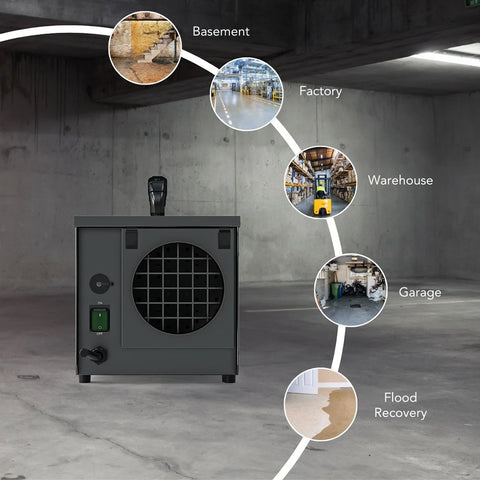
With robust humidity control, conservators can reduce the need for costly restoration work and protect artefacts for future generations.
Monitoring matters: Don’t just control—track
Humidity control is only effective if it’s consistent. That’s why devices like the Ionmax Q10 Air Quality Monitor are essential companions in climate-sensitive spaces.
These monitors provide real-time data on:
- Temperature
- Relative humidity
- Airborne particulates
- CO2 and VOC levels
With constant tracking, collection managers can act quickly if conditions shift—preventing damage before it happens.
Invest in invisible protection
Preservation doesn’t always start with display cases or alarm systems. Sometimes, the most effective way to protect our shared heritage is to manage the air around it.
For archives, libraries, and museums, the right humidity control setup isn’t a luxury—it’s a long-term investment in stability, integrity, and preservation.
Explore Ionmax’s range of industrial dehumidifiers and air quality monitor to create a climate where history can last.


